Mapping Redemption Sequences: How Casino Codes Build Progressive Live Dealer Access and Retention Tiers
Written by Dana Russell · Jun 9, 2026
Mapping Redemption Sequences: How Casino Codes Build Progressive Live Dealer Access and Retention Tiers
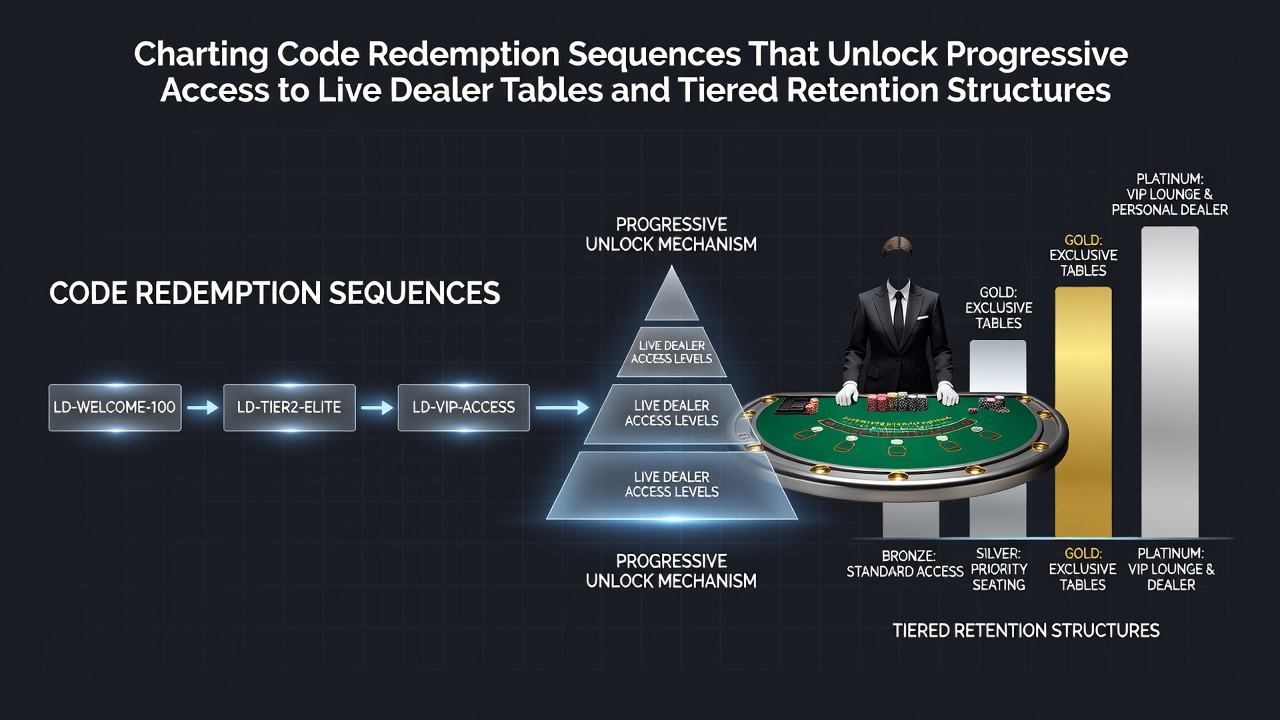
Redemption sequences operate as structured pathways where players activate specific codes in order to gain escalating privileges at online casino platforms, and these mechanics tie directly into both live dealer integration and multi-level retention frameworks that encourage continued engagement. Operators design these chains so that initial redemptions unlock entry-level features while subsequent activations open higher tiers, including direct entry to live dealer environments staffed by real-time croupiers. Data from industry tracking shows that platforms implement such sequences to manage player progression systematically rather than through isolated promotions.
Core Elements of Sequential Code Systems
Each sequence begins with a base-level code that registers in the player's account profile and activates preliminary bonuses such as free credits or spin allocations, after which follow-up codes must be entered within designated time windows to maintain momentum toward advanced benefits. These follow-up activations often require minimum wager thresholds or specific game selections before the system grants the next stage, creating a chained dependency that aligns player activity with platform goals. Observers note that casinos log every redemption event in centralized databases so that tier status updates automatically once the sequence criteria are satisfied.
Platforms structure the codes themselves with alphanumeric strings that correspond to backend triggers, and players typically locate these strings through email newsletters, account dashboards, or partner site promotions. Activation occurs via a dedicated redemption portal where the code is submitted, and the system verifies eligibility before applying the associated reward layer. What's interesting is how the verification step cross-checks against prior redemptions in the same sequence to prevent out-of-order attempts that could bypass intended progression.
Progressive Pathways to Live Dealer Tables
Many sequences incorporate a dedicated milestone that grants access to live dealer tables once a predetermined number of earlier codes have been successfully redeemed, and this milestone frequently coincides with a shift from simulated RNG games to streamed video feeds featuring professional dealers. The transition requires players to complete the prior steps, which may include deposit confirmations or playthrough completion on standard roulette wheels, before the live section becomes selectable in the game lobby. Figures from platform analytics reveal that live dealer access serves as a retention anchor because the real-time interaction increases session duration compared with automated alternatives.
Once the live threshold is reached, additional codes in the same sequence can unlock table-specific privileges such as priority seating or custom betting limits that are unavailable to players outside the progression chain. These privileges are managed through the same account system that tracks sequence completion, ensuring that only verified participants receive teh enhanced options. Researchers have documented that this gated approach helps platforms balance table capacity with player demand during peak hours.
Tiered Retention Frameworks and Code Integration
Tiered retention structures layer on top of the redemption sequences by assigning players to loyalty brackets based on cumulative activity metrics that include completed code chains, and each bracket carries its own set of ongoing benefits that compound over time. Entry into the first retention tier often follows the initial code redemptions, while higher brackets open only after multiple sequence completions across different promotional cycles. Retention data compiled by operators indicates that players who advance through these brackets demonstrate longer account lifespans than those who remain at entry levels.
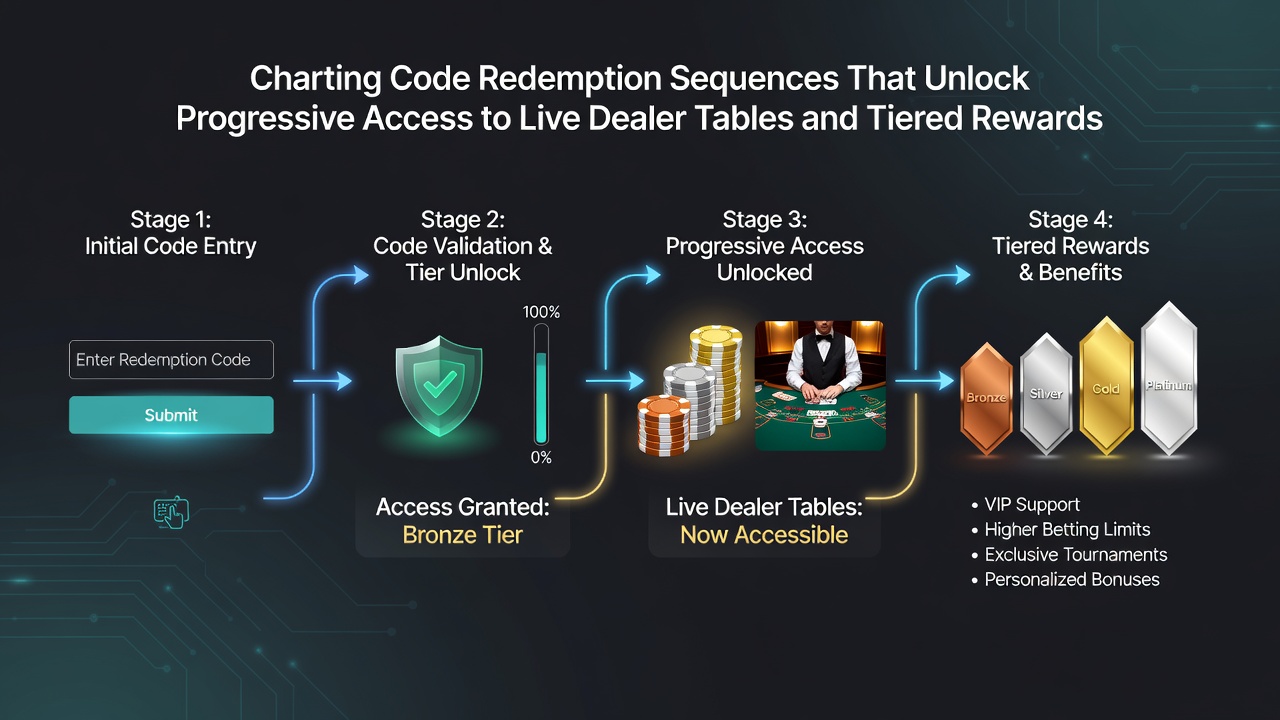
June 2026 updates to several major platforms introduced refined tracking algorithms that automatically adjust tier thresholds in response to aggregate redemption patterns, allowing operators to fine-tune the pace at which players move between retention levels. These adjustments maintain system balance while preserving the core sequence logic that links code activation to both live access and tier advancement. The changes reflect ongoing refinements rather than wholesale redesigns of existing frameworks.
Operational Mechanics Behind Code Chains
Backend systems enforce the sequence order through timestamped flags that activate only after the preceding code has cleared its validation checks, and any attempt to skip ahead results in an error message directing the player back to the required step. This enforcement mechanism protects the intended progression while also generating usage statistics that operators review for promotional effectiveness. Account dashboards display progress bars that visualize remaining steps in the current sequence, giving players clear visibility into what comes next.
External partners sometimes distribute intermediate codes that feed into the main sequence, and these distributed codes carry unique identifiers that the platform matches against the primary chain before crediting the corresponding reward. Such partnerships expand reach without altering the internal logic that governs live dealer unlocks or tier movements. Studies from the University of Nevada, Las Vegas Center for Gaming Research have examined how these distributed elements affect overall sequence completion rates across different player segments.
One case documented by platform administrators showed a player completing a five-code sequence over a two-week period, resulting in both live dealer access and movement into the second retention tier with associated cashback percentages. The logs confirmed that each redemption triggered the next eligibility flag without manual intervention, illustrating the automated nature of teh system. Similar patterns appear consistently in aggregated operator reports that track sequence adherence.
Conclusion
Redemption sequences function as interconnected systems that coordinate code activations with both live dealer privileges and tiered retention benefits, and the structured order ensures that players advance through defined stages rather than accessing all features simultaneously. Platforms continue to refine the underlying triggers and verification processes to align with evolving operational requirements, while external data sources such as those maintained by the American Gaming Association provide broader context on how these mechanics fit within larger industry patterns. The result is a predictable yet flexible framework that manages player progression across multiple dimensions.