UK Gambling Commission Unveils Q2 2025 Stats: £3.2 Billion GGY Drives Industry as Betting Shops Hold Steady

The Latest Quarterly Snapshot from the UK Gambling Commission
Recent figures from the UK Gambling Commission's official quarterly report paint a clear picture of the Great Britain gambling sector's performance during July to September 2025, known as Quarter 2 of the financial year spanning April 2025 to March 2026; total Gross Gambling Yield—or GGY, which measures total stakes minus winnings paid out—reached £3.2 billion across the industry excluding lotteries, a figure that captures both land-based and remote activities while underscoring the sector's ongoing momentum as the financial year progresses toward its March 2026 close.
What's interesting here is how the data breaks down between physical venues and online platforms, with land-based betting contributing £592 million in GGY, a solid chunk that represented 48.2% of the total non-remote GGY; remote sectors, meanwhile, pulled in even bigger numbers, as casino, betting, and bingo activities online generated £2.0 billion combined, showing remote casino alone at £1.4 billion, which accounted for 69.9% of that remote casino, betting, and bingo total.
And then there's the betting shop landscape: 5,782 such outlets dotted across Great Britain, a presence that remains a cornerstone even as digital shifts accelerate; experts tracking these trends note that this shop count provides stability, especially when paired with the £592 million GGY from non-remote betting, which includes those high-street staples where punters place bets on everything from horse racing to football matches.
Breaking Down Land-Based Betting's Role
Land-based betting didn't just hold its ground—it delivered £592 million in GGY for the quarter, securing 48.2% of all non-remote gambling yield; this segment, fueled by those 5,782 betting shops nationwide, reflects a traditional backbone that's weathered digital disruption, as operators in places like high streets in London or market towns in the Midlands keep drawing crowds for in-person wagering.
Take one observer who's followed commission data for years: they point out how this £592 million figure aligns with patterns where physical bets on live sports events spike during summer months like July through September, encompassing major horse racing festivals and early football leagues; yet, while remote options grow, land-based betting's share in non-remote totals shows resilience, particularly as the FY builds toward March 2026 reporting deadlines.
But here's the thing: GGY from these shops and venues isn't isolated; it forms part of a broader non-remote ecosystem that includes casinos and bingo halls, though betting leads the pack at that 48.2% slice, data indicates steady participation where foot traffic sustains yields despite broader industry shifts.
Remote Sectors Surge with Casino Leading the Charge
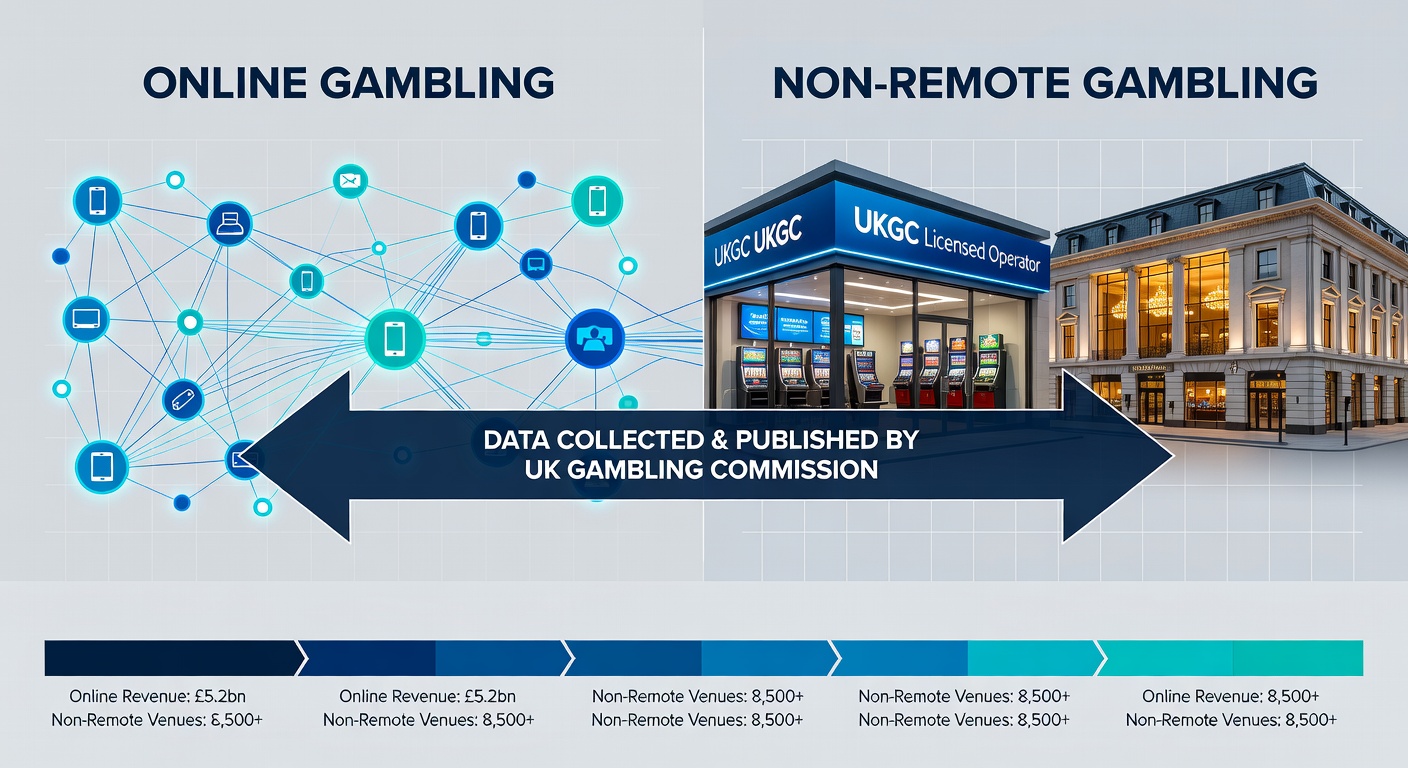
Remote gambling stole the show in Q2, racking up £2.0 billion in GGY from casino, betting, and bingo combined, a total that dwarfs land-based efforts and highlights how online platforms have become the industry's engine; within that, remote casino generated £1.4 billion, claiming 69.9% of the remote casino-betting-bingo pot, as players turned to digital tables for slots, blackjack, and roulette from smartphones and laptops across the country.
Figures reveal this dominance isn't new, but the quarter's numbers—£1.4 billion specifically for remote casino—underscore acceleration, especially with seamless apps and sites drawing in users who might skip physical shops; researchers who've parsed similar past quarters observe that summer periods often boost remote betting too, yet casino's outsized role here, at nearly 70% of its grouped total, signals where tech meets entertainment most profitably.
So, while land-based betting shops number 5,782 strong, remote's £2.0 billion GGY overshadows, blending betting's online wagers with bingo's virtual halls and casino's high-yield games; it's noteworthy that this remote trio's performance sets the pace for the full FY ending March 2026, as operators eye sustained digital growth.
Betting Shops: A Snapshot of Physical Presence
Across Great Britain, 5,782 betting shops stood ready during July to September 2025, venues that contributed directly to the £592 million land-based betting GGY; these outlets, from chains like Betfred and William Hill to independents, dot urban centers and suburbs alike, offering not just bets but screens for live events and sometimes even community hubs (though regulations keep things tightly controlled).
One case that experts reference involves regional breakdowns—though not detailed in this release, past patterns show higher concentrations in England, supporting that 48.2% non-remote share; turns out, this shop count has hovered steadily in recent years, providing a counterweight to remote's rise, even as total GGY hit £3.2 billion excluding lotteries.
Now, with the FY halfway marked toward March 2026, these physical sites remind observers that gambling's roots remain tangible; data shows their GGY contribution holds firm, fueling debates on high-street viability while remote casino's £1.4 billion pulls focus online.
GGY Totals and What They Mean for the Sector
Total GGY of £3.2 billion for the quarter encapsulates it all—land-based betting's £592 million alongside remote's £2.0 billion powerhouse, excluding lotteries to spotlight core commercial gambling; Gross Gambling Yield, by definition, nets out operator stakes against payouts, offering a clean measure of industry health, and these Q2 numbers indicate robustness as summer betting heats up.
Remote casino's £1.4 billion slice, at 69.9% of RCBB totals, emerges as the standout, but land-based's 48.2% non-remote dominance shows balance; people who've studied commission releases note how such figures inform policy, from affordability checks to advertising rules, all building toward the March 2026 FY wrap-up.
Yet, the reality is this data excludes lotteries, narrowing focus to betting shops, casinos, and remote plays; with 5,782 shops underpinning physical bets, the quarter's stats reveal a hybrid industry thriving on both fronts.
Context Within the Financial Year
As Quarter 2 wraps July-September 2025, the FY from April 2025 to March 2026 gains clarity, with £3.2 billion GGY setting a benchmark early on; operators now project forward, balancing 5,782 betting shops' stability against remote casino's £1.4 billion pull and the broader £2.0 billion remote haul.
Studies of prior years show Q2 often captures seasonal uplifts from sports and festivals, and here, land-based betting's £592 million at 48.2% fits that mold; what's significant is remote's lead, signaling where investments flow as March 2026 nears.
And though specifics on participation rates await further breakdowns, the raw GGY totals—£3.2 billion strong—equip stakeholders with facts for planning, from venue upgrades to digital expansions.
Key Takeaways and Forward Look
In summary, the UK Gambling Commission's Q2 2025 data delivers straightforward insights: £3.2 billion total GGY excluding lotteries, £592 million from land-based betting across 5,782 shops (48.2% of non-remote), and £2.0 billion remote with casino at £1.4 billion (69.9% of RCBB); these figures, fresh from the quarterly report, highlight remote growth alongside physical endurance, as the industry eyes the March 2026 FY end.
Observers note the balance—digital casino's dominance paired with betting shops' ubiquity—offers a roadmap; turns out, such stats don't just number-crunch, they shape the sector's path forward, keeping all eyes on upcoming quarters.